
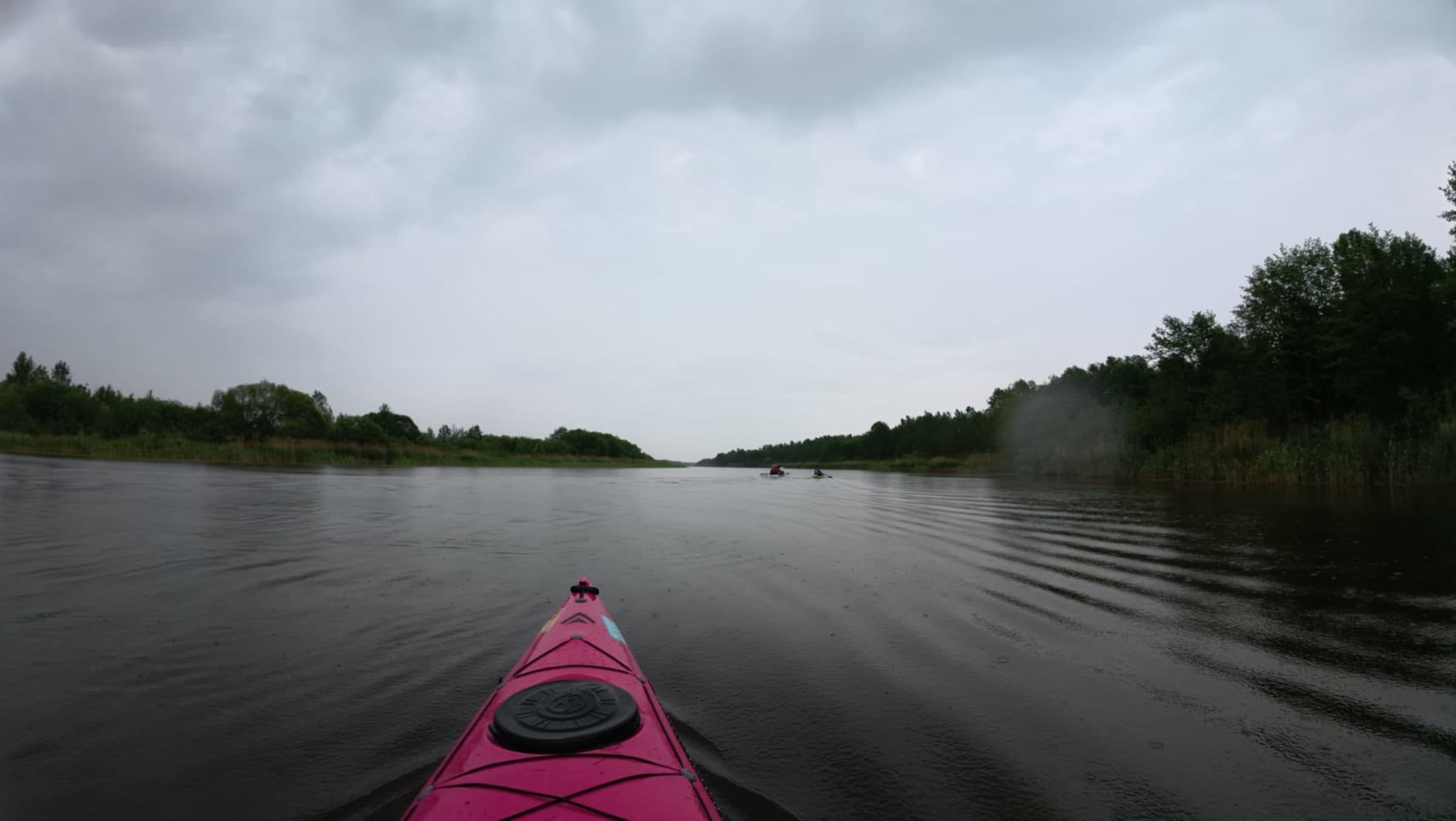
The idea of visiting Emajõe Suursoo had been floating around in my head for a long time — but as it goes in life, if you think about something long enough, it eventually happens. Whether it turned out exactly as I'd imagined is another question, but one thing is certain: this place doesn't leave anyone indifferent. The real question is whether everyone will love it. This is big, lazy water that's in no hurry to go anywhere — it just sits there, barely moving. Paddling here can be pure bliss or a serious workout, especially when it's been raining all day, the banks are too soft to stop on, and the only way to get warm is to keep paddling.
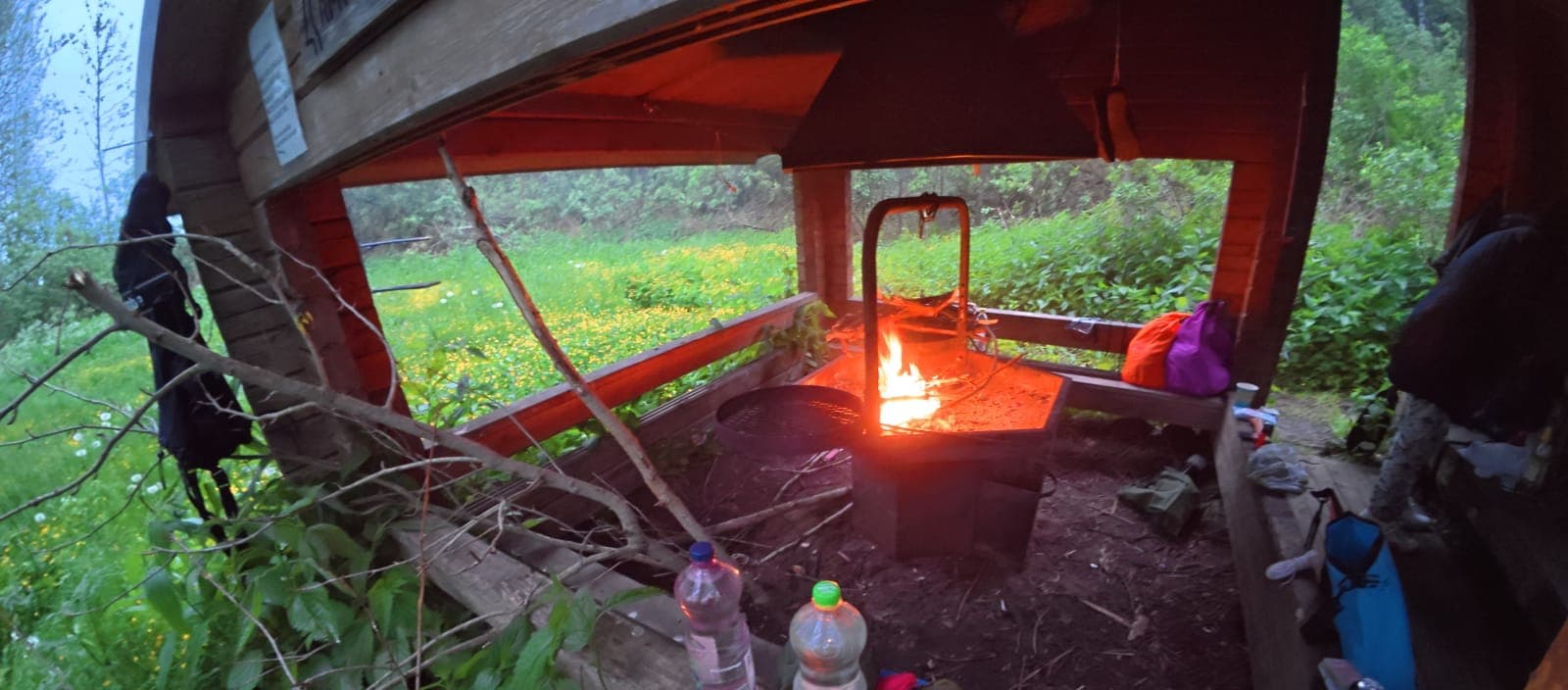
Koosa forest shelter in the bog
Our trip began at Kavastus, the gateway to Suursoo. Since we set off late in the afternoon, the first day was a short one — kayaks in the water, 3 km of paddling, and we were already at the Koosa campsite. The weather had already turned rainy and Saturday was looking even worse, which actually worked in our favour: on Friday evening the campsite was completely empty. We had the whole lean-to shelter to ourselves, made a fire under cover, and slept without having to worry about wet tents. Evening grumbles grumbled, and then we fell asleep.
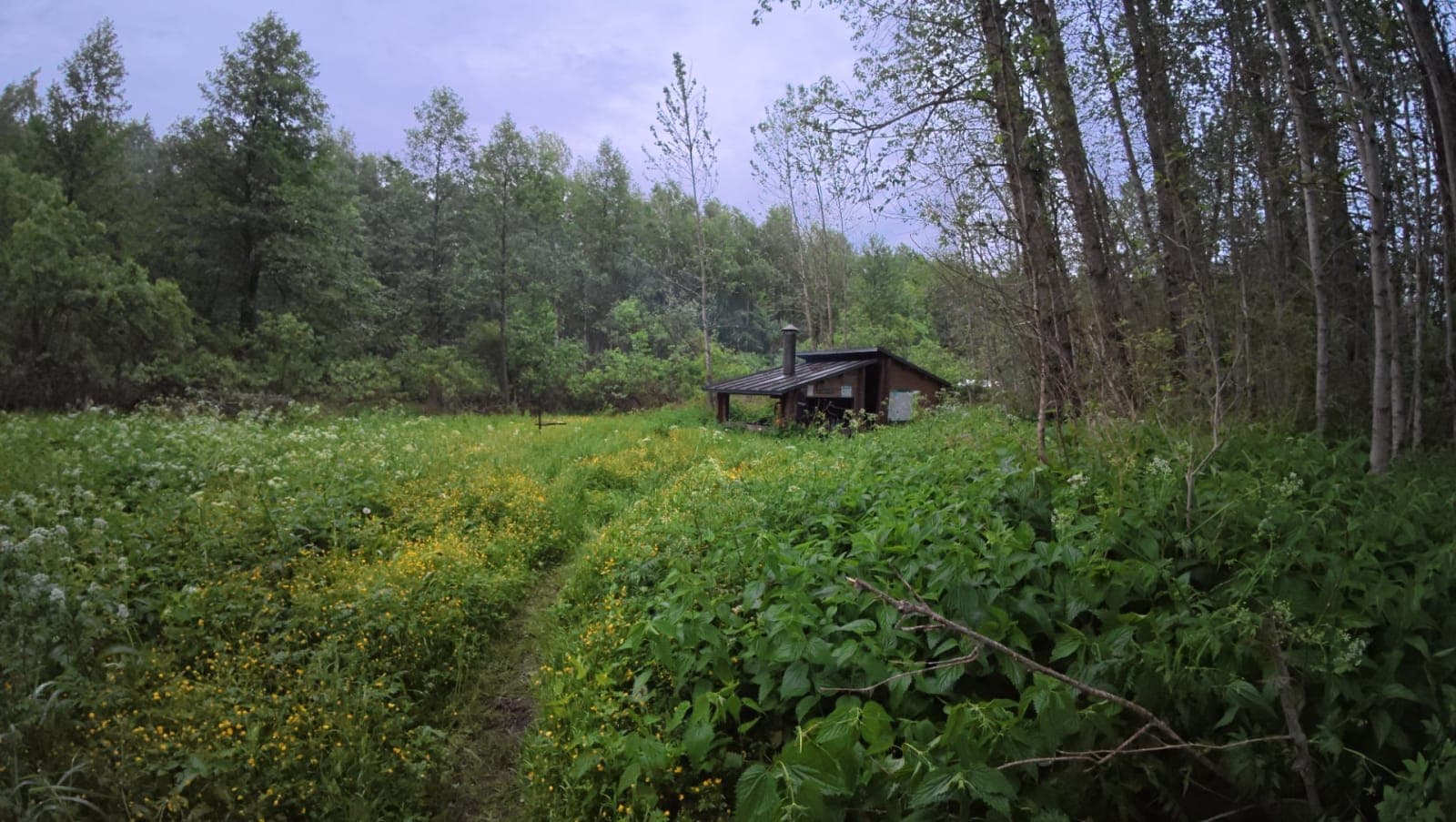
Koosa forest shelter interior
The day promised rain, and plenty of paddling to go with it. We had some first-timers in the group, so we were initially a little wary about motorboats flying past — but bad weather has its perks. All day, we crossed paths with just one boat, puttering along quietly. Our first proper rest stop was at the Otisaare forest shelter.
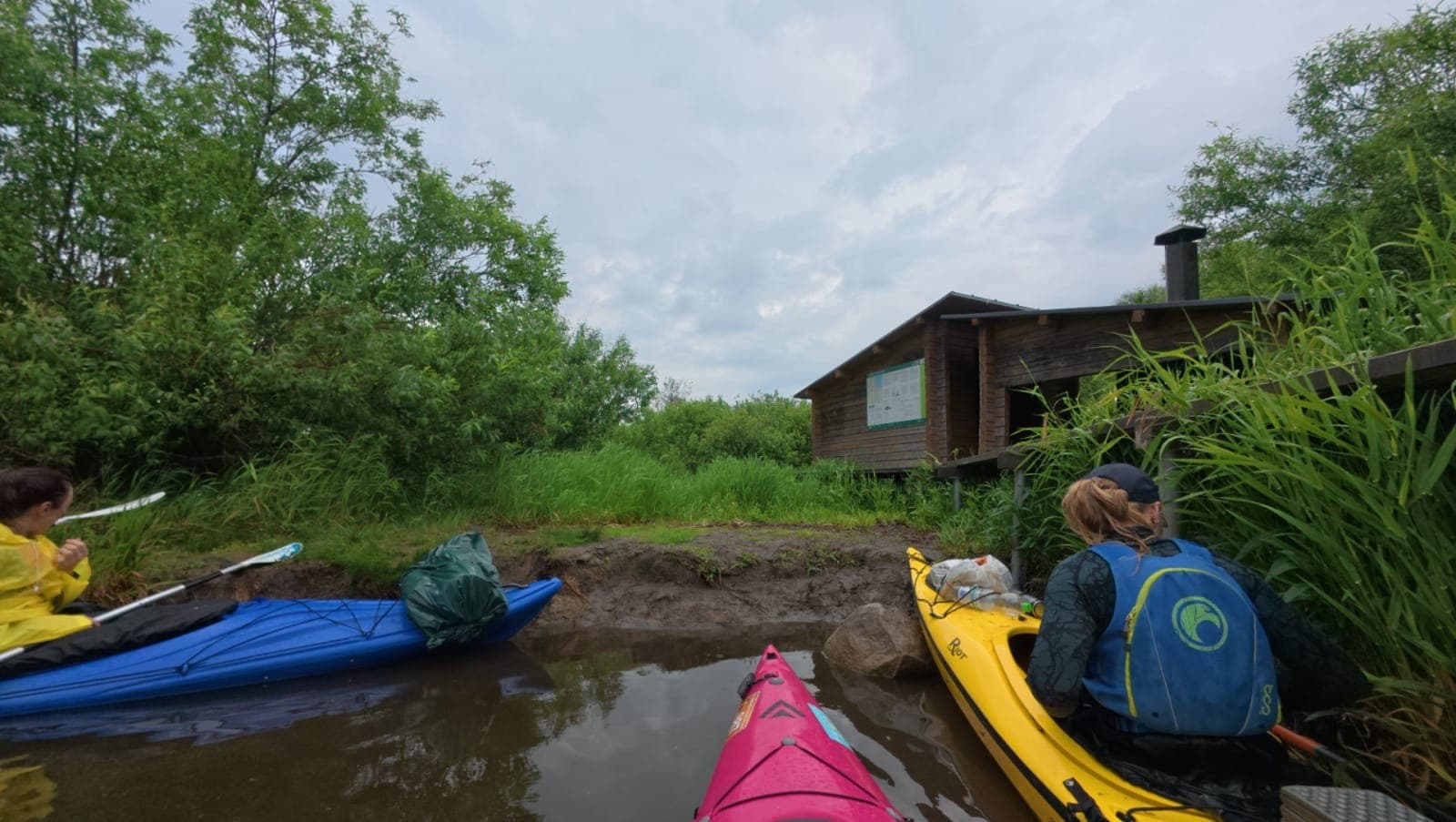
Otisaare forest shelter on the riverbank
From there, our route led us to Praaga — a village with no road access whatsoever. We even spotted a local who was curious about where we'd come from and where we were headed, and wished us well on our way.
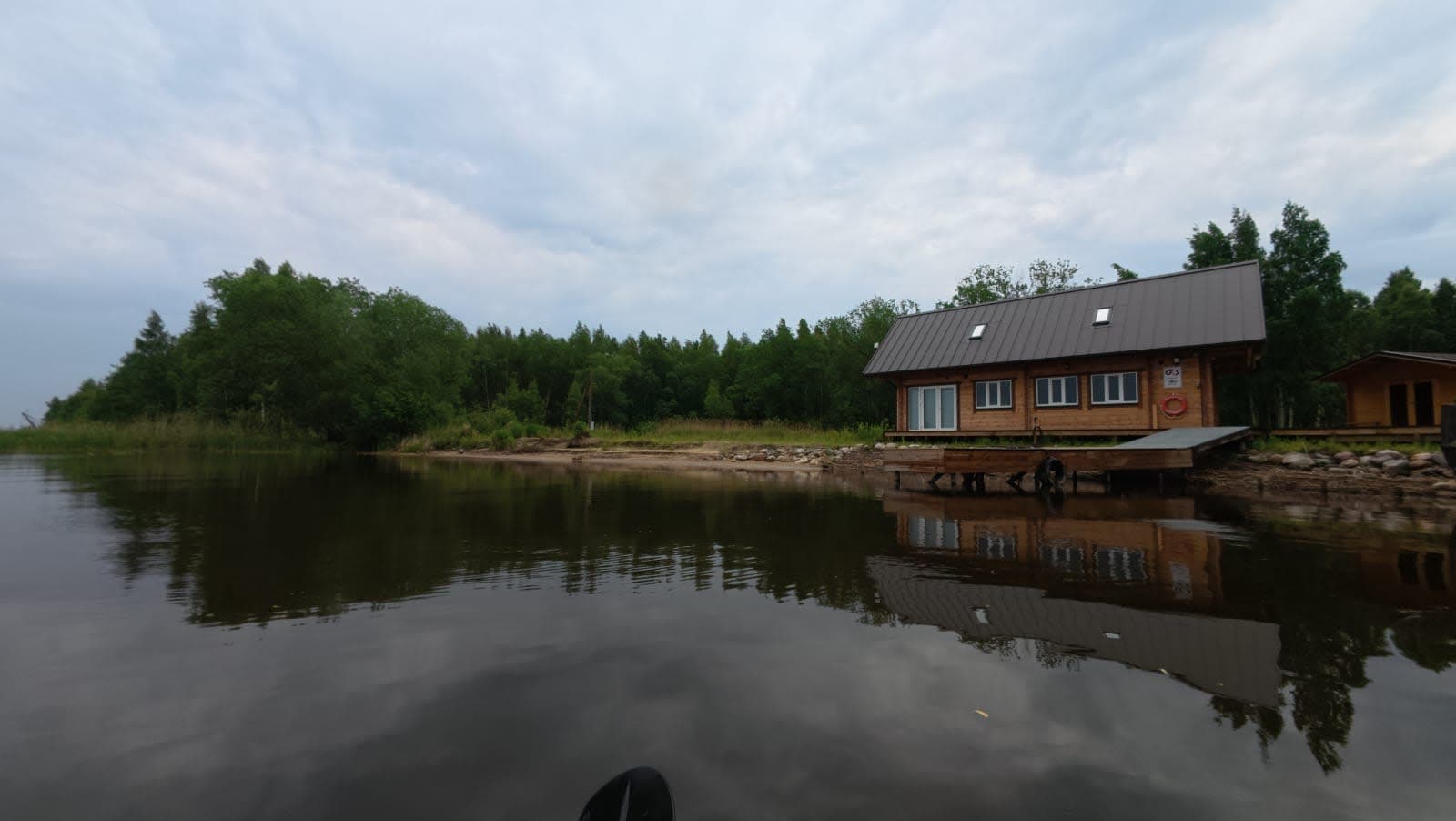
Praaga village harbour
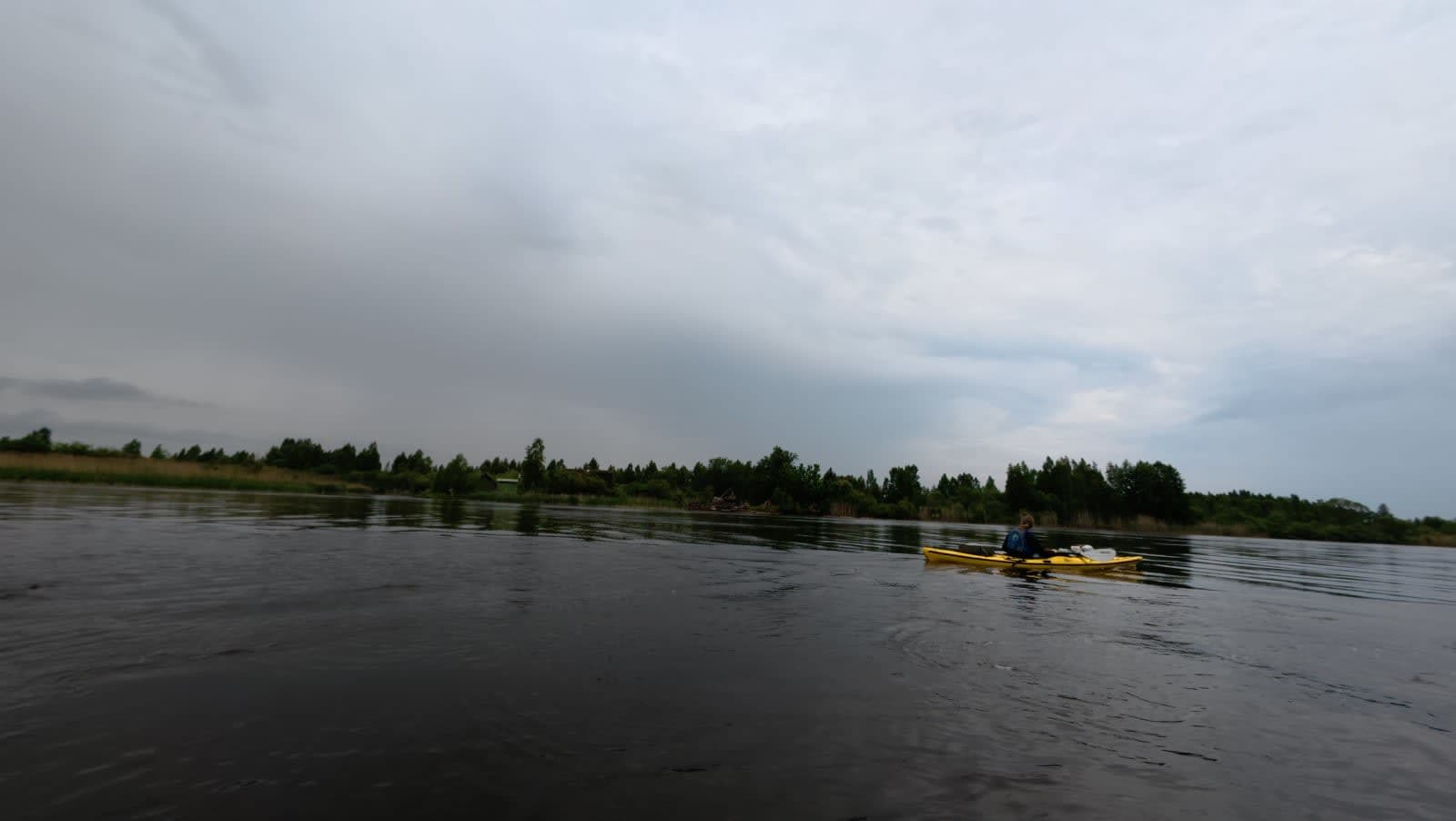
Praaga village seen from the water
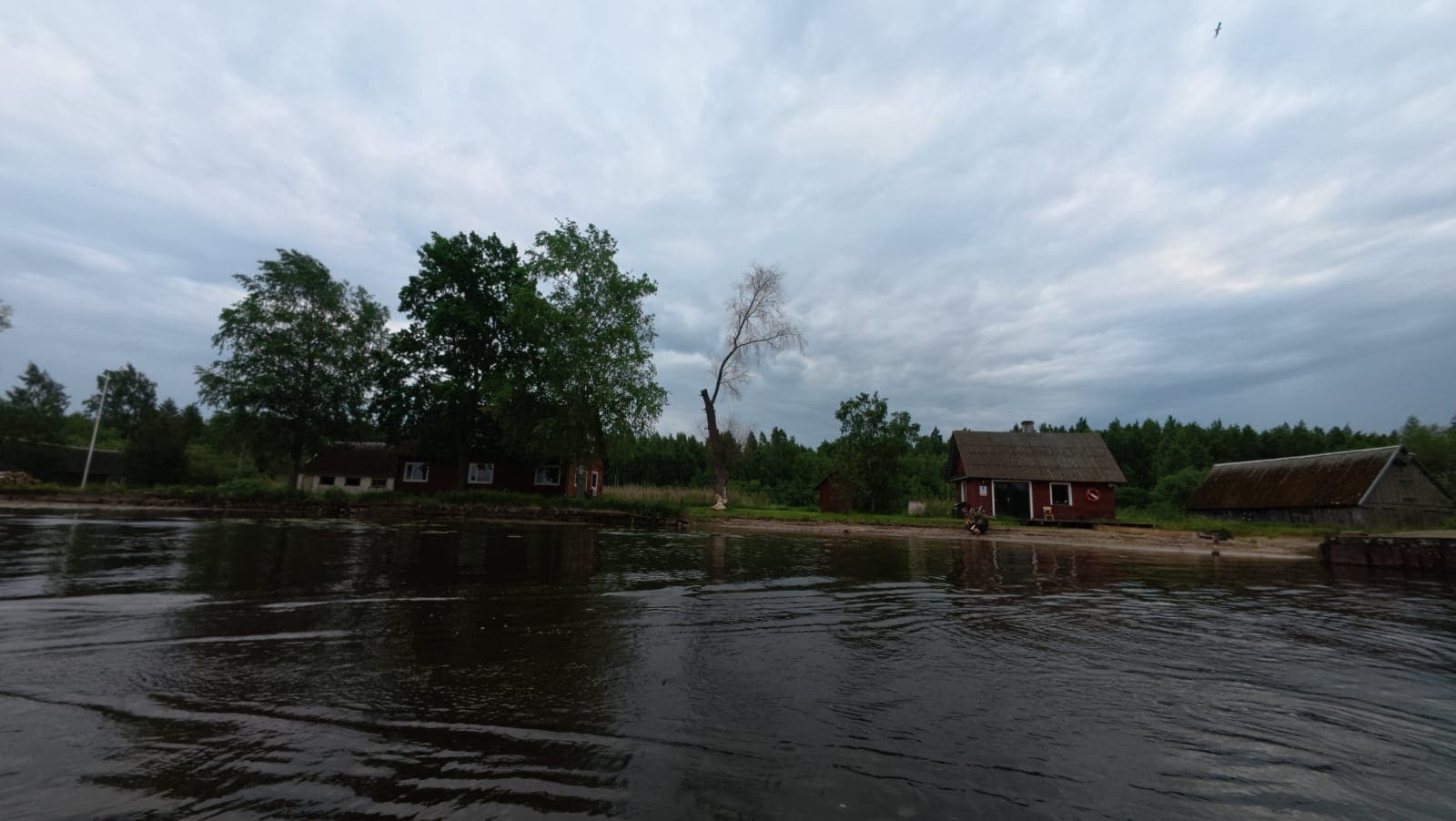
Praaga village, accessible only by water
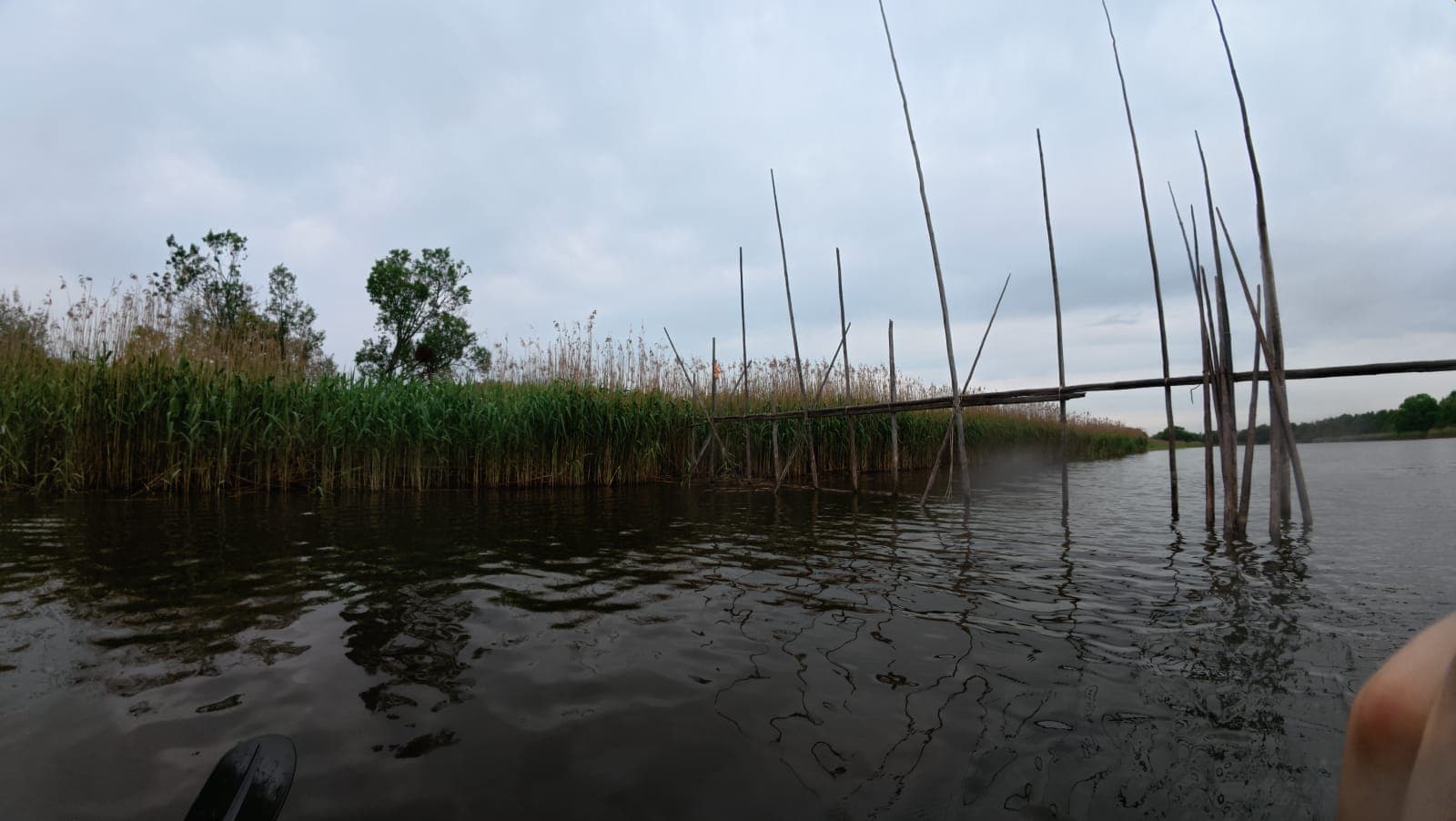
The Emajõgi below Kavastus is dotted with fish trap stakes — with the right kind of boat, you could almost run a slalom course between them.
At Praaga we had a decision to make. The original plan was to paddle across the lake all the way to the mouth of the Kalli river, but just then thunder rolled in, the wind picked up and the waves came with it. We scrapped that idea, turned back along the Emajõgi to the other mouth of the Kalli, and started our journey up the Kalli river from there. It was much the same — wide, slow water where paddling upstream posed no real challenge.
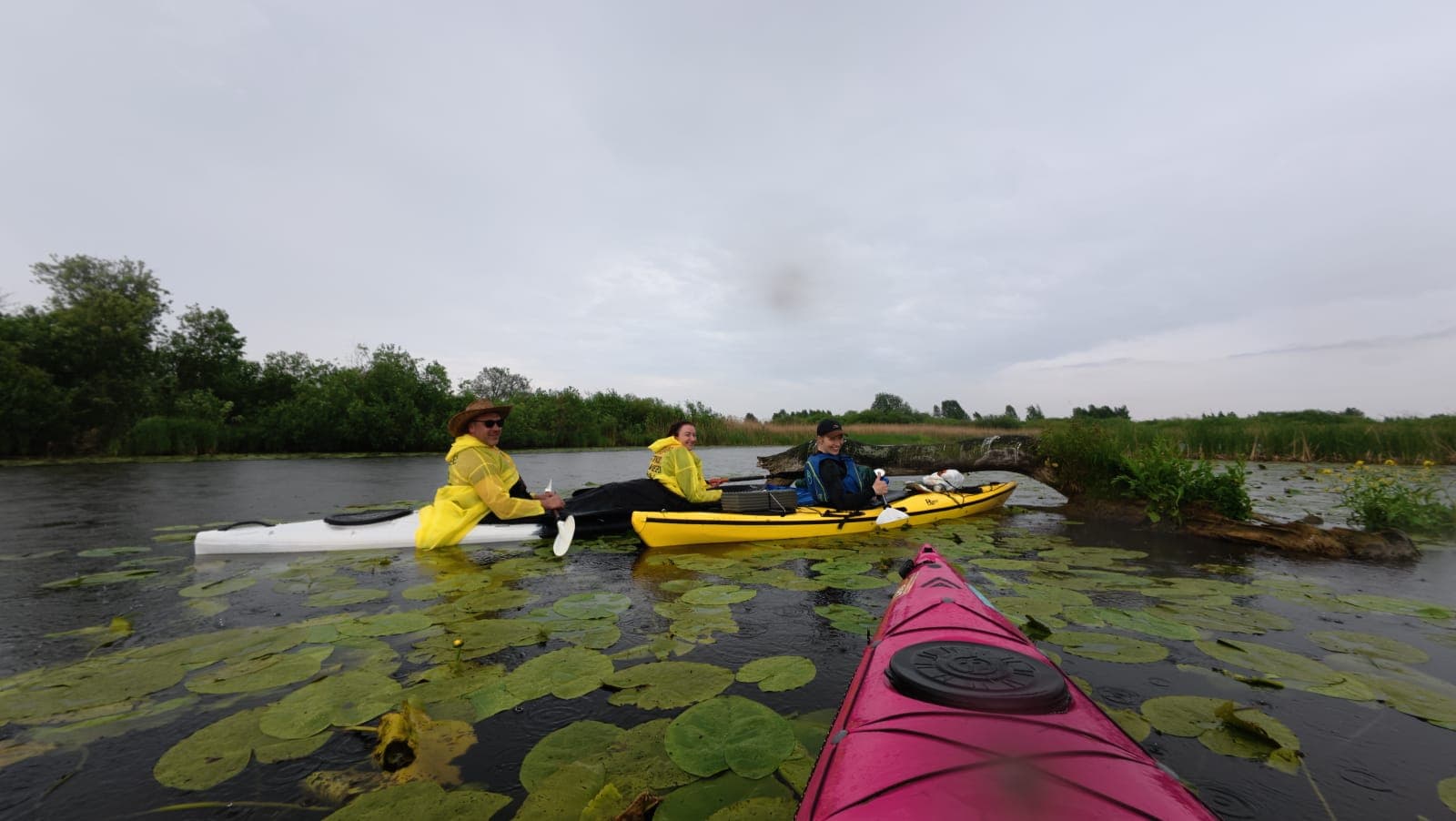
Entering the mouth of the Kalli river
Most of the day had been wet, but the worst was still to come. As we approached Kalli lake, the wind grew stronger and the rain heavier. People were getting tired, and with the banks too boggy to pull up on, there was nowhere to stop. Emotions started to surface when we finally saw Kalli lake stretched out before us — wind howling, small whitecaps forming on the waves — and we knew we had to cross it.
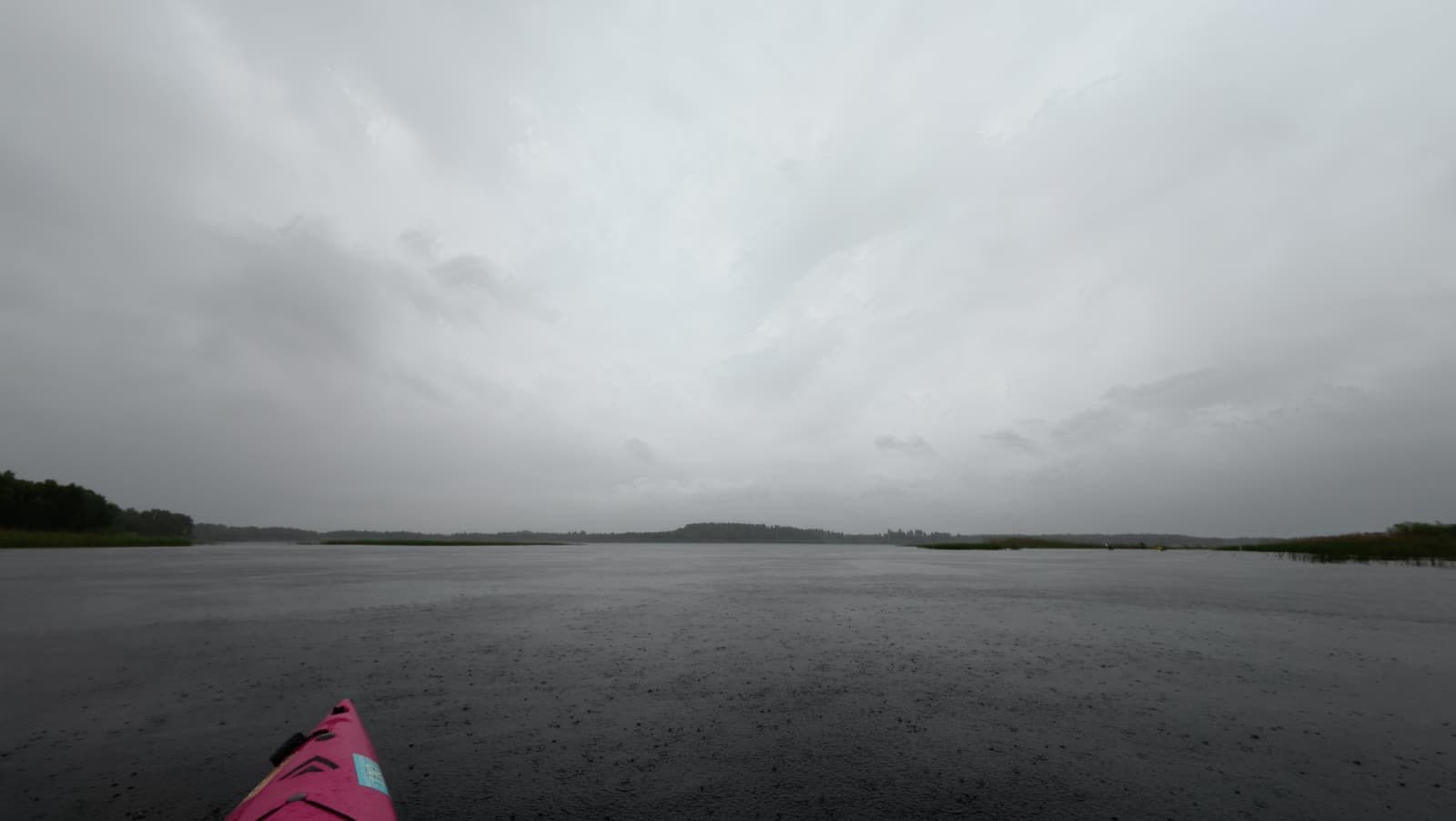
Kalli lake, still sheltered from the wind
What followed were long, gruelling kilometres across the lake. The wind pushed straight at us, everyone was exhausted, and we ground our way through the headwaves until we finally reached the other shore — a bank that at least held our weight. The first instinct was to camp right there and then. Nobody wanted to hear that our planned campsite was still 4.5 km away, and the ground was wet and springy — not exactly inviting for a tent. But after a short rest, the weather started to turn. Food helped lift the mood too, and it slowly dawned on everyone that this spot really wasn't going to work for camping. Since the whole route was new territory for us, I hadn't wanted to raise anyone's hopes about the campsite — but the map at least suggested firmer ground ahead. We packed the boats back up and set off on the final 4.5 km stretch. A little further along the Kalli, we turned onto the Leego river and arrived at Leego lake, where we hoped to find a place to spend the night.
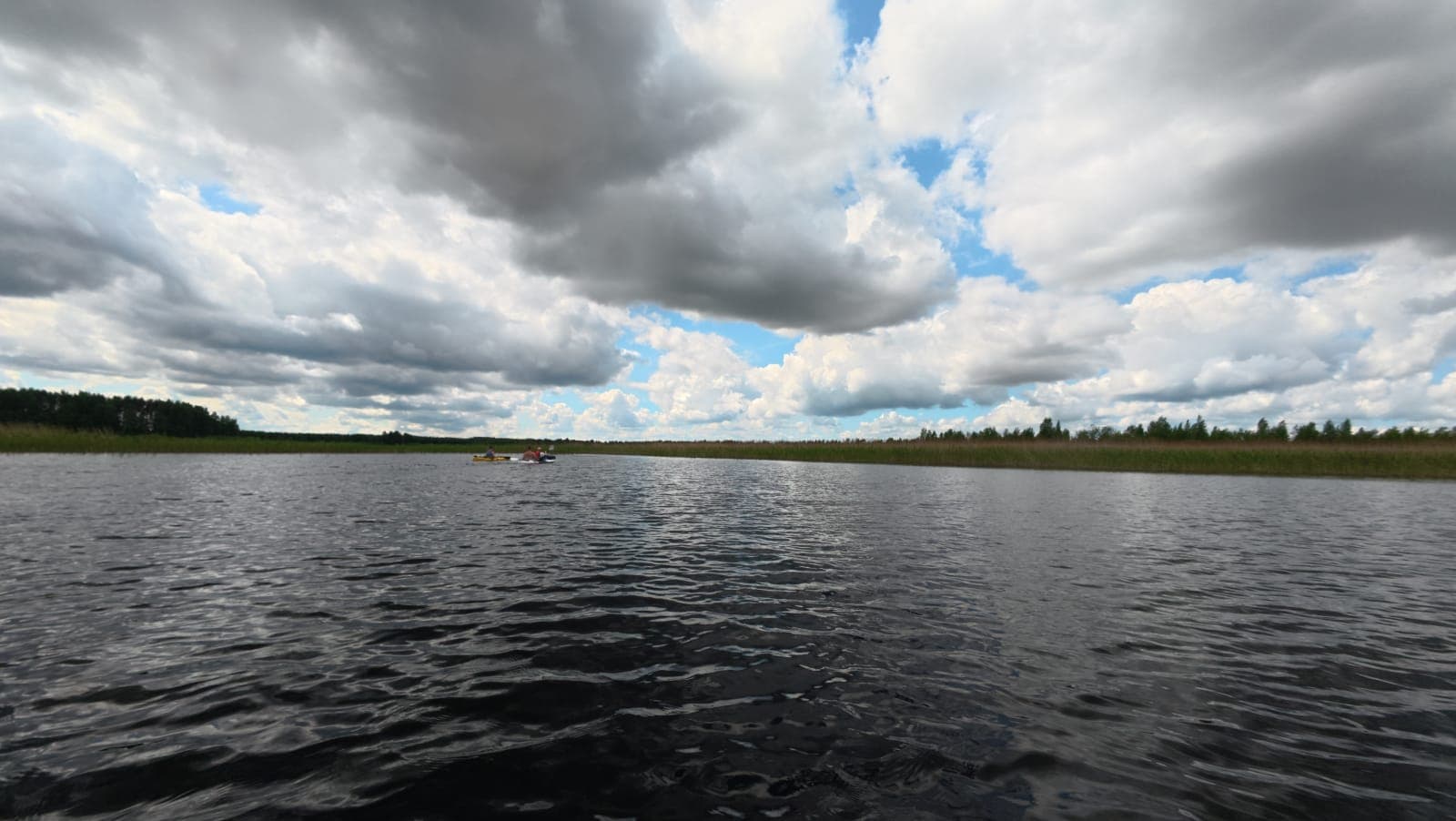
Leego lake at dusk
Looking at the map and then looking at the shoreline, something felt off — it was as if half the lake was missing. According to the map we should have been roughly in the middle of it, with the campsite still some distance away, but as we paddled toward the reeds, it turned out they were passable. Like stepping through a secret wardrobe into Narnia, we pushed through the hidden reed passage and emerged into the other half of the lake — and there was our campsite. A beautiful pine forest with solid ground underfoot. The weather had transformed completely: the sun was smiling down on us. We lit a fire, dried our clothes, and everyone agreed it had absolutely been worth pushing on. The day's total: 27.3 km. As the evening wore on, we discovered that the locals most excited to meet us were the midges — absolutely relentless. We retreated into our tents early, rested up for the final day's paddle, and drifted off to sleep to the calls of a bittern echoing across the water.
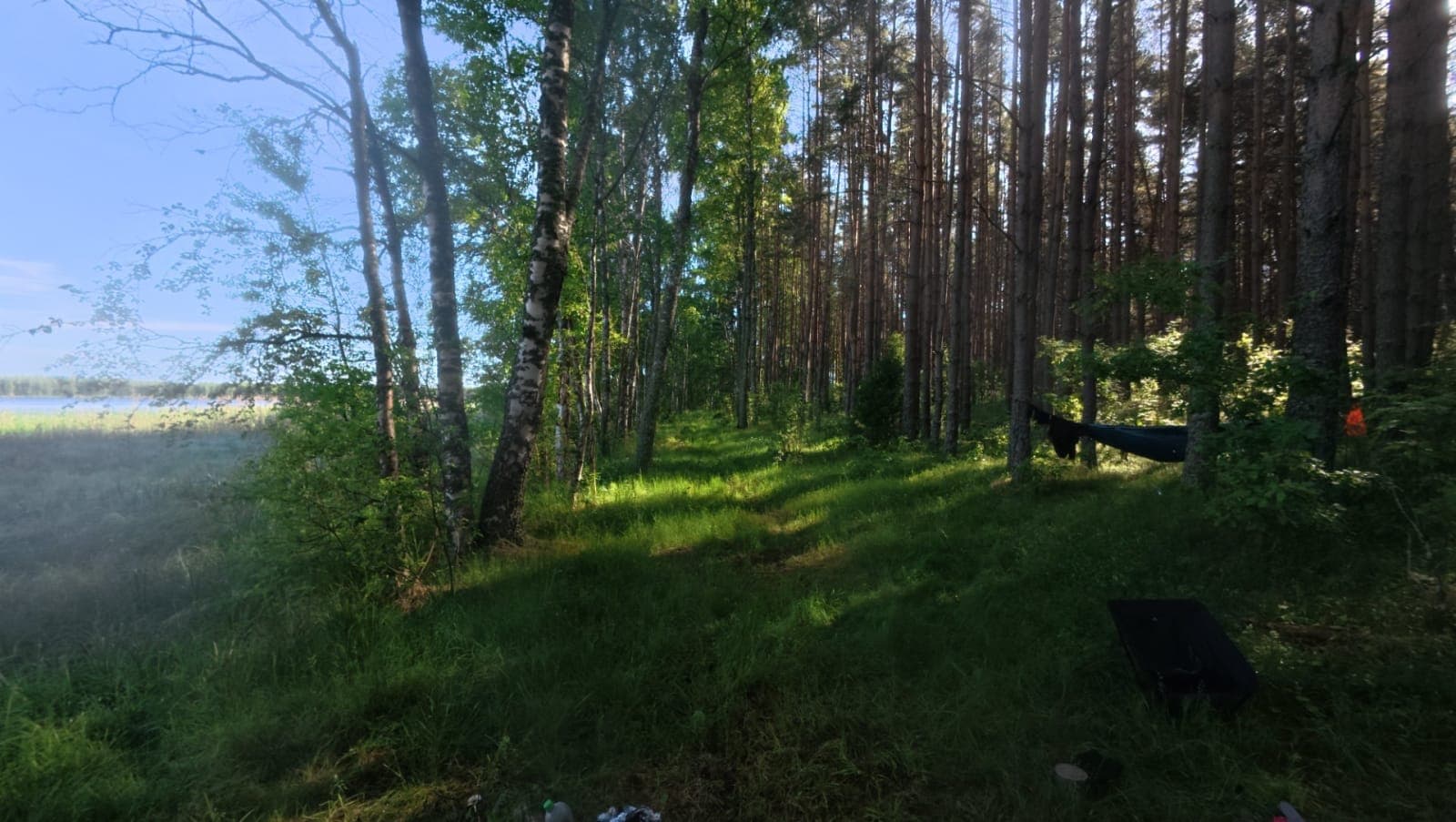
Camp at Leego lake in the pine forest
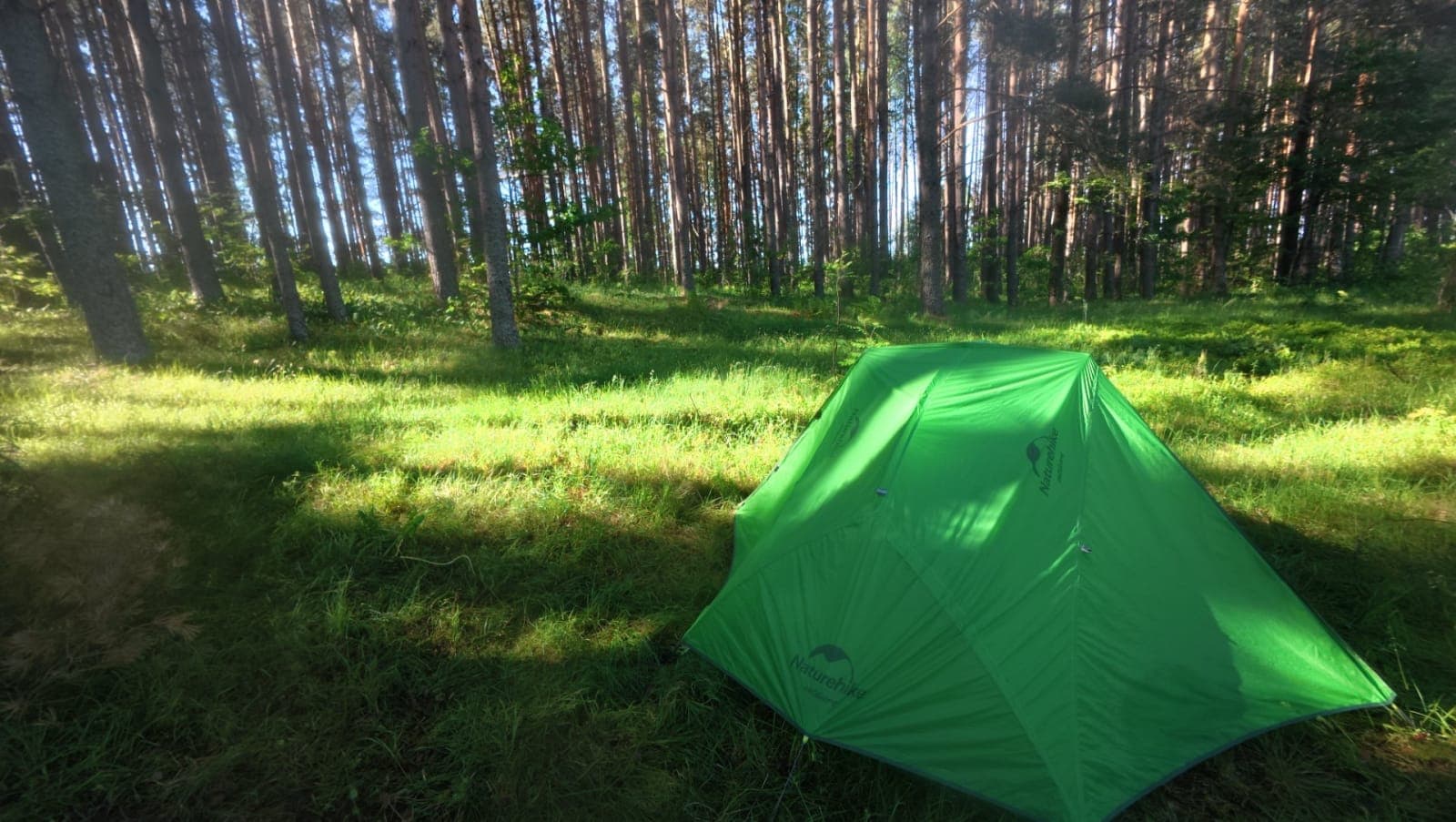
Evening at Leego campsite
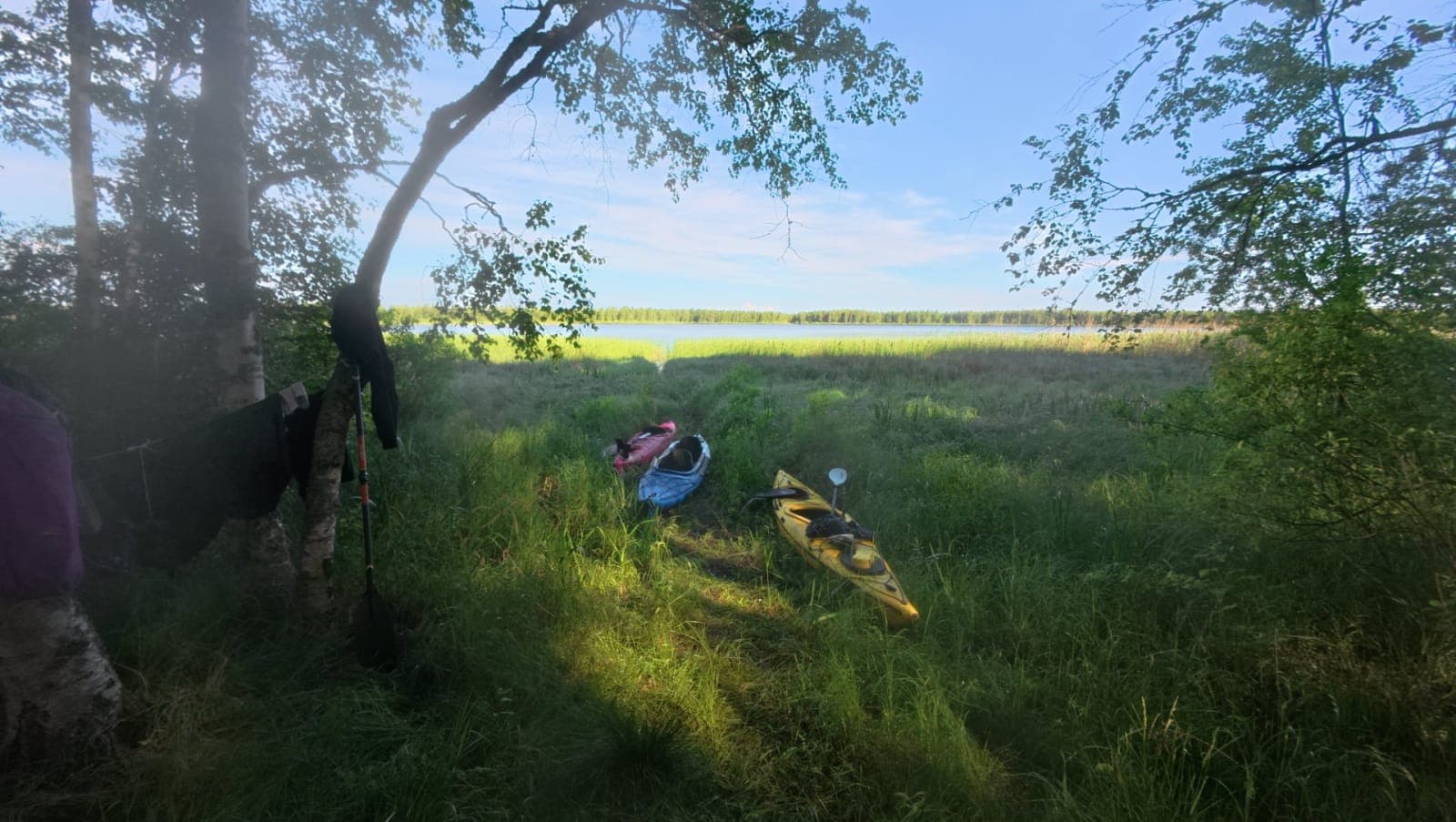
Morning light at Leego campsite
The last day greeted us with perfect sunny weather — warm, bright, and everything a paddler could ask for. Well rested and in good spirits, we set off back across Leego lake and down the Leego river to the Kalli, then continued upstream toward the source of the Kalli. We passed the mouths of both the Soitse and Apna rivers, and gradually the wide Kalli narrowed to a small Kalli, then to a ditch, and finally to nothing more than a culvert with a damp drainage channel beyond it. Fortunately, the car was waiting just before that drainage ditch — but not before we'd had to haul the boats twice over overgrown beaver dams.
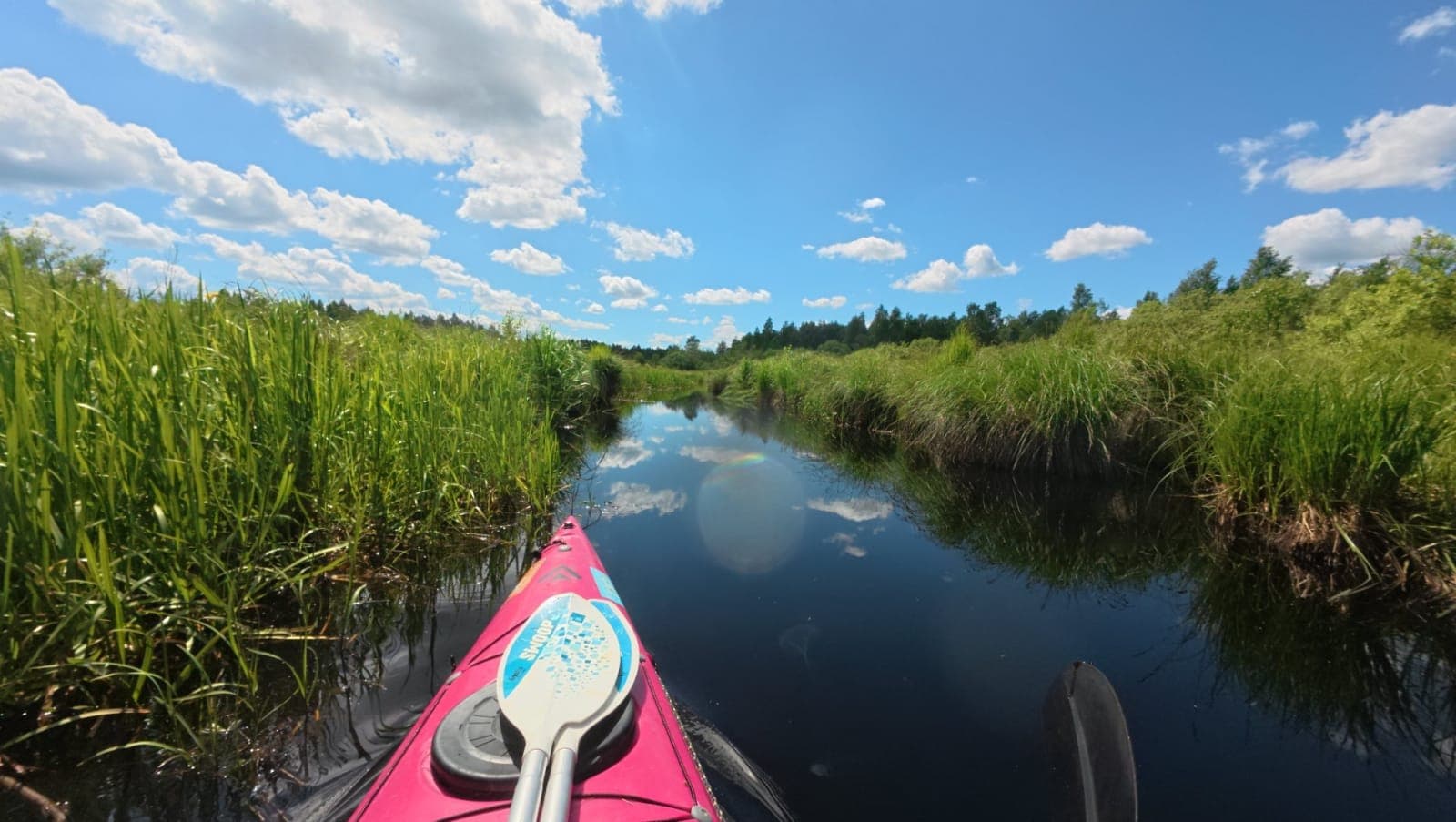
The Kalli river shrinking to a narrow stream
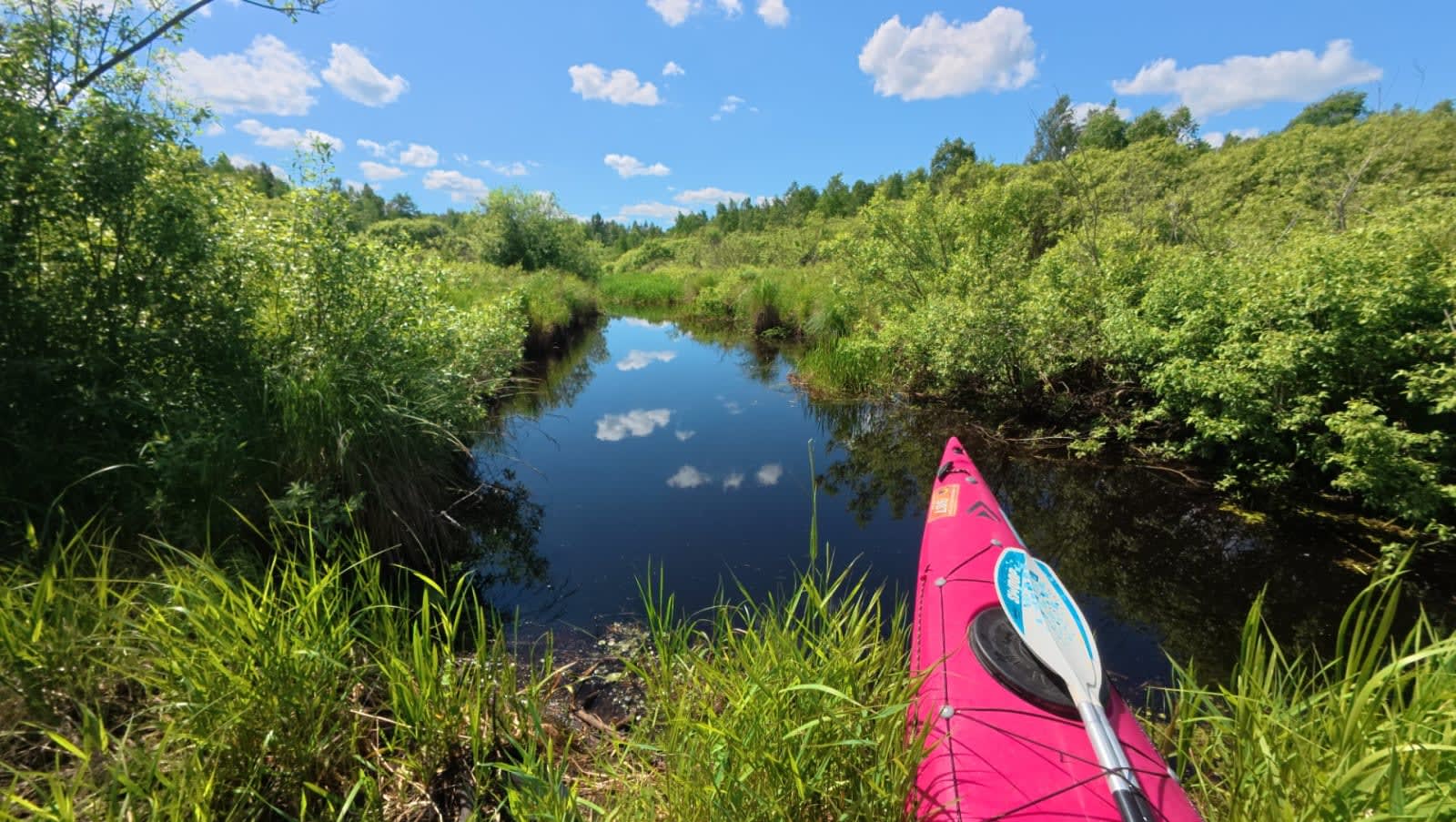
Lifting boats over the first beaver dam
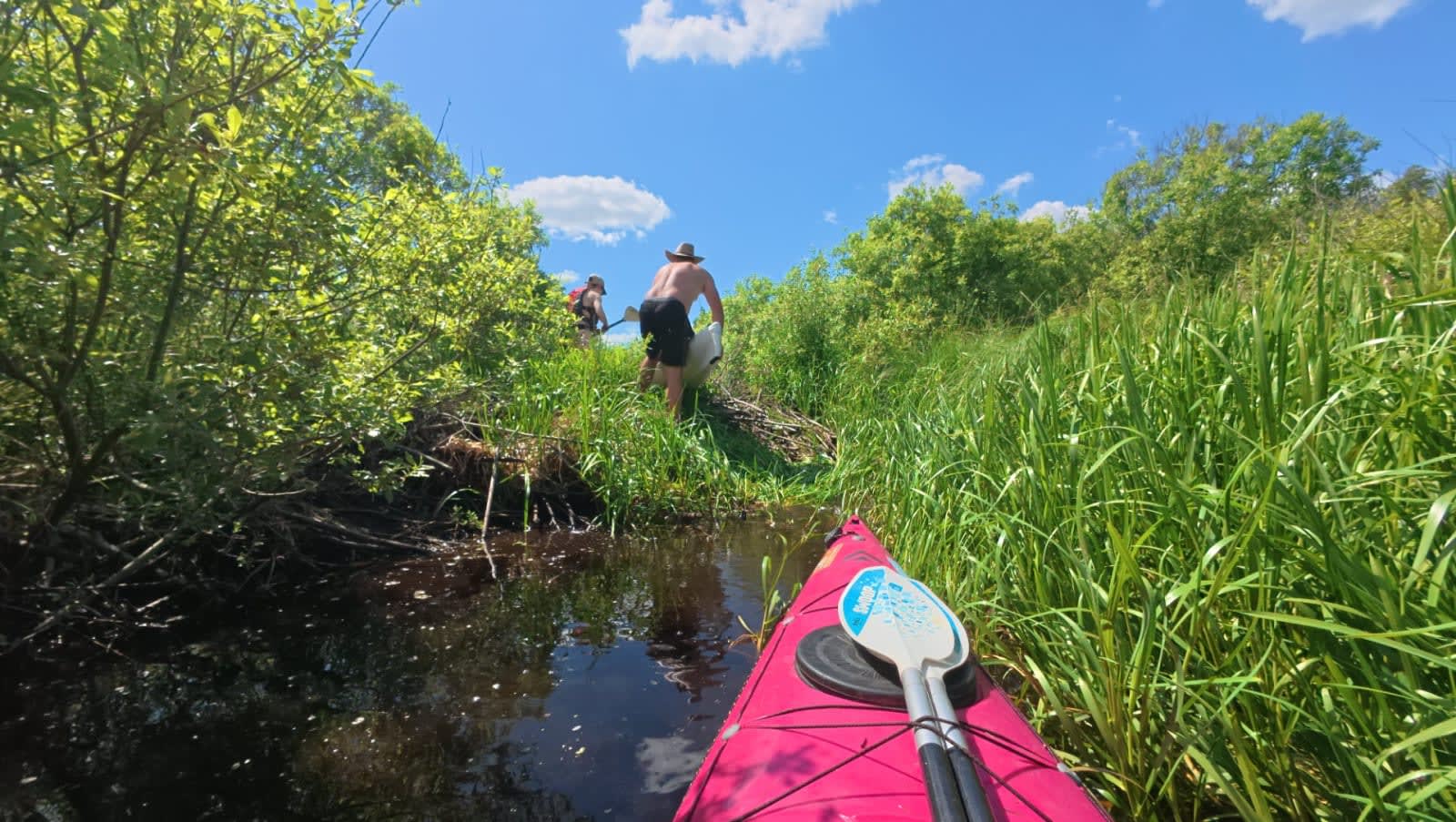
Portaging over the second beaver dam
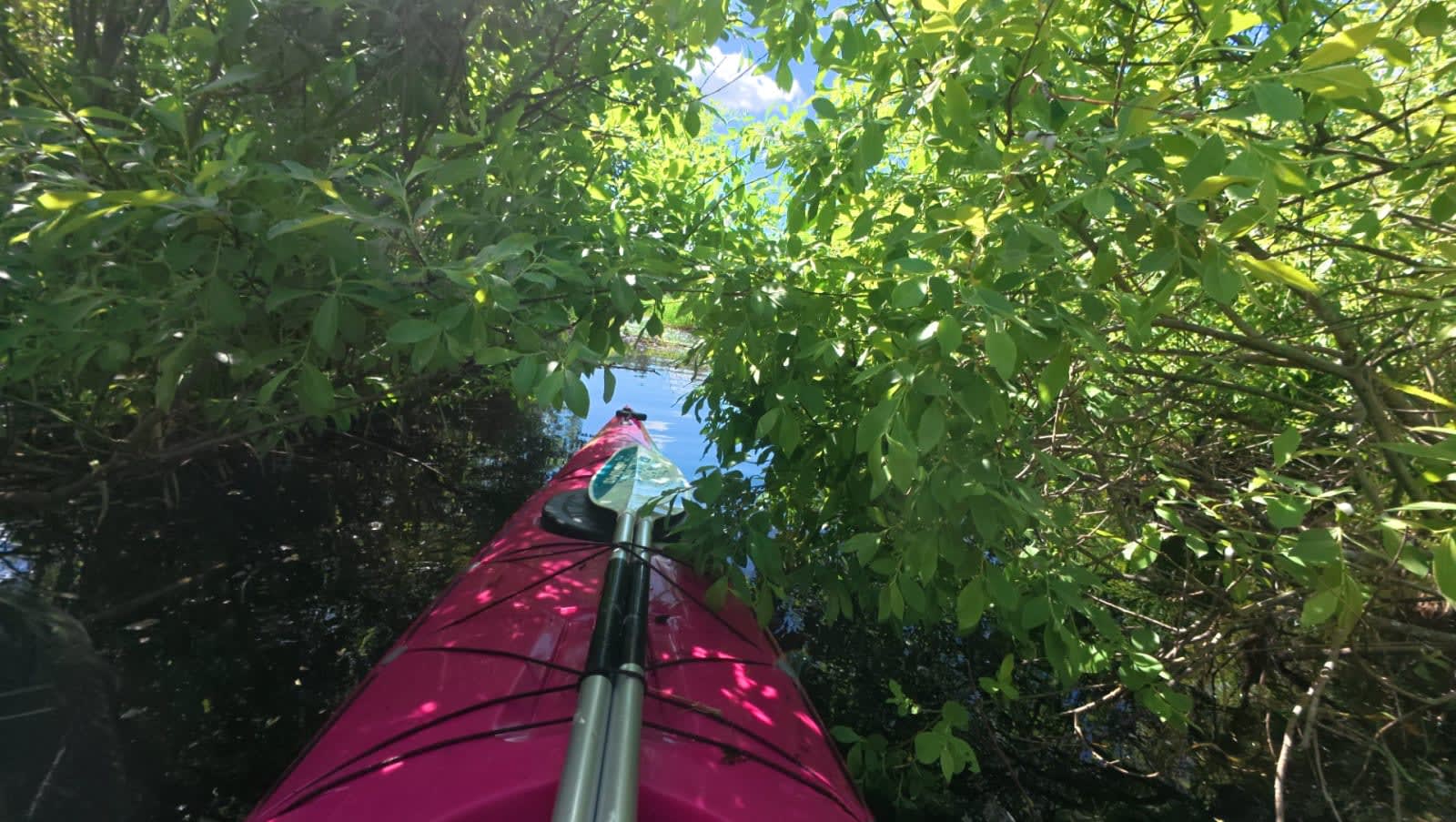
Where the Kalli river becomes a drainage ditch
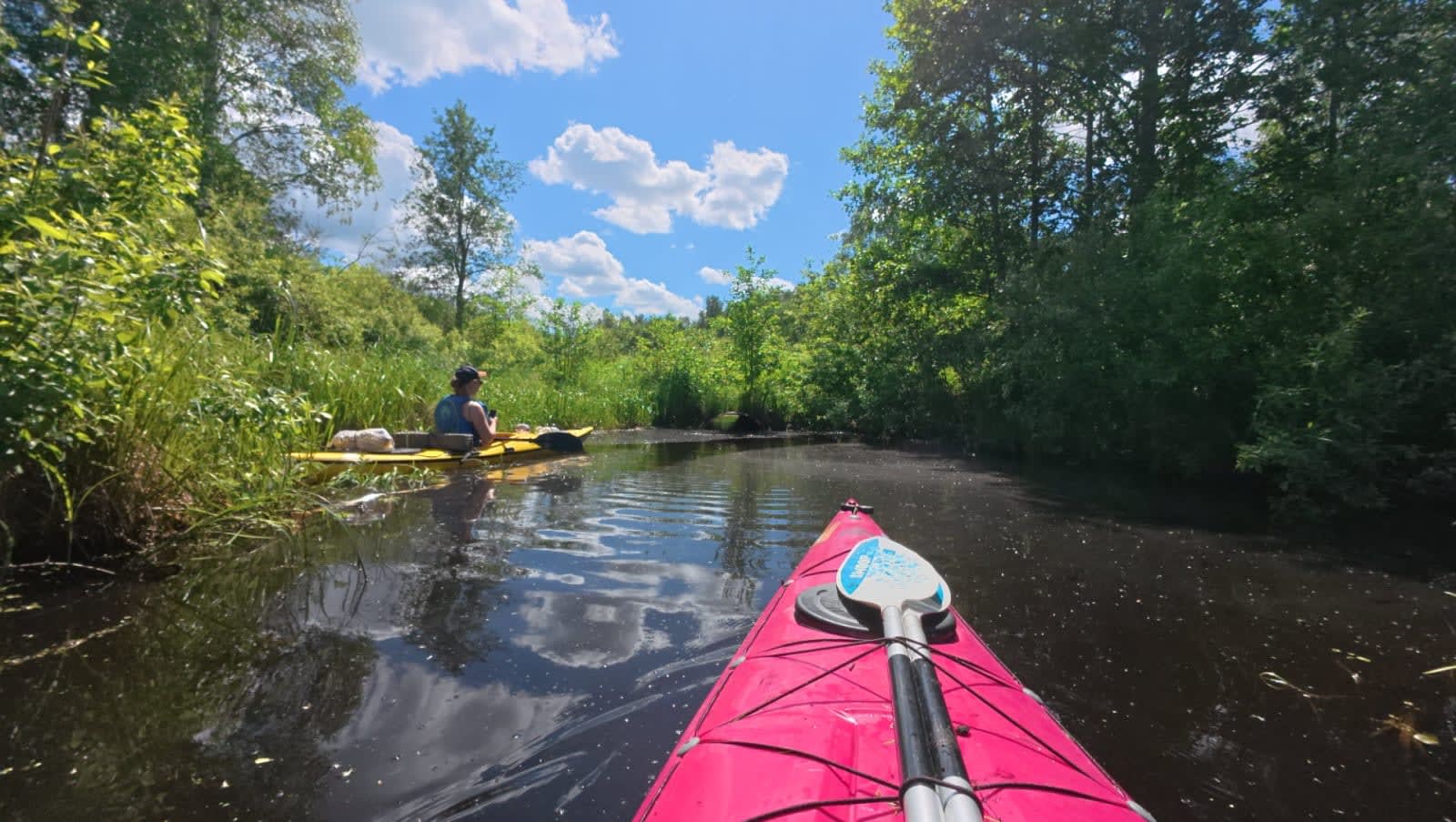
Beyond this culvert, only a wet ditch remains — the end of the paddling route
The final day brought us 7.5 km, for a total trip distance of 37 km. It was a solid effort — especially given that there was no current to help us along, and the weather worked against us more than once. And yet, somehow, all of that fades into the background and what remains is simply a good memory. I'd go back in a heartbeat. If you'd like to tackle this route with your own group and need boats or a guide, feel free to get in touch. Stay wild and free.